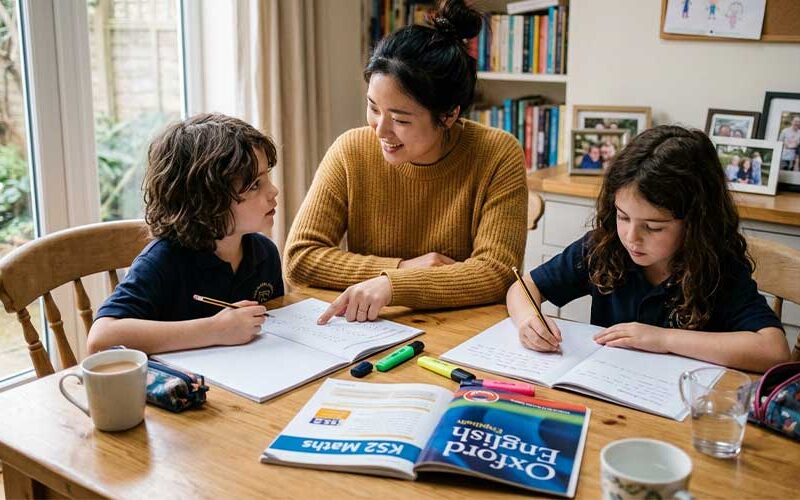

The early years of a child’s life are filled with rapid growth and discovery. From the first words to the first social interactions, every experience plays a role in shaping how a child thinks, feels, and connects with the world. Between the ages of zero and five, development happens at a pace that is never quite repeated later in life.
During this time, the people who care for a child have a profound influence. It’s not only about meeting basic needs such as feeding or supervision. It’s about how a caregiver responds to emotions, encourages curiosity, and creates a safe environment where a child feels understood.
For many families, nannies become an important part of this developmental journey. They are present in the child’s daily routine, witnessing small milestones and supporting them in real time. This close and consistent interaction allows nannies to contribute in ways that go far beyond simple childcare.
Filipino nannies, in particular, are often recognized for their nurturing approach and strong sense of responsibility. Their caregiving style tends to combine warmth, patience, and attentiveness — qualities that align closely with what young children need during their most formative years.
In this guide, we’ll explore how Filipino nannies support early childhood development through everyday interactions, routines, and meaningful engagement with children.
Why Early Childhood Development Matters
The early years of life are not just a phase of growth — they are the foundation upon which everything else is built. During this period, a child’s brain develops at an extraordinary rate, forming connections that influence how they learn, communicate, and regulate emotions in the future.
What makes this stage especially important is how responsive it is to everyday experiences. Simple interactions — a conversation during play, a comforting response to a child’s frustration, or a shared moment of curiosity — all contribute to how the brain organizes itself. These moments may seem small, but repeated over time, they shape lasting patterns.
Development in early childhood is not limited to one area. It unfolds across several dimensions at once. Emotional development helps children feel secure and form attachments. Cognitive development supports thinking, problem-solving, and memory. Social development teaches how to interact with others, while language development builds communication skills. Each of these areas is interconnected, and progress in one often supports growth in another.
Early experiences shape lifelong learning and behavior. When children feel safe, supported, and engaged, they are more open to exploring their environment and trying new things. This creates a positive cycle where confidence leads to curiosity, and curiosity leads to further learning.
For caregivers, this means that their role carries real influence. It’s not about formal teaching or structured lessons. It’s about being present, responsive, and intentional in daily interactions. The way a caregiver listens, speaks, and responds can either strengthen or limit a child’s developmental progress.
Understanding the importance of this stage helps families make more informed decisions about who they trust with their child’s care — and why the quality of that care matters so much.
The Unique Strengths of Filipino Nannies
When families choose a nanny, they are not only looking at experience or availability. They are also considering qualities that are harder to measure but deeply important in daily care — patience, warmth, reliability, and the ability to build a genuine connection with a child. This is where Filipino nannies are often recognized for standing out.
A key strength comes from a caregiving culture that places strong value on family, respect, and attentiveness. Many Filipino nannies grow up in environments where caring for younger siblings or relatives is a shared responsibility. As a result, nurturing behaviors are often developed early and carried into their professional roles.
This cultural background is reflected in how they interact with children. Filipino nannies are often described as naturally warm and attentive, creating an environment where children feel emotionally supported. They tend to be patient during challenging moments and consistent in their responses, which is especially important for young children who are still learning how to regulate emotions.
Another important aspect is communication. Many Filipino nannies have strong English skills, which allows them to engage in meaningful conversations with children and maintain clear communication with parents. This is particularly valuable in supporting language development and ensuring alignment within the household.
In addition to these qualities, there is often a strong sense of responsibility and commitment to their role. Families frequently notice that Filipino nannies approach their work with dedication, taking pride in being a positive and reliable presence in the child’s daily life.
Filipino nannies are known for nurturing and emotionally supportive care. This combination of cultural values, communication ability, and genuine attentiveness creates an environment where children can feel safe, understood, and encouraged to grow.
Over time, these strengths contribute not only to smoother daily routines, but also to deeper developmental support — something that becomes more visible as the child continues to grow and learn.
Supporting Emotional Development
Emotional development is one of the most critical aspects of early childhood, and it begins with a child feeling safe, seen, and understood. During the first years of life, children are still learning how to recognize and manage their emotions. They rely heavily on caregivers to guide them through this process.
Filipino nannies often play a key role here through their responsive and attentive caregiving style. When a child is upset, frustrated, or overwhelmed, the way a caregiver reacts matters more than the situation itself. A calm voice, patient presence, and consistent reassurance help the child feel secure, even in difficult moments.
This kind of response builds what is known as secure attachment. When children experience reliable comfort and support, they begin to trust that their needs will be met. Over time, this trust becomes the foundation for emotional confidence. A child who feels emotionally safe is more likely to explore, communicate, and form healthy relationships.
Daily interactions are where this support takes shape. Simple moments — acknowledging a child’s feelings, offering comfort without rushing, or gently guiding them through a challenge — all contribute to emotional growth. These are not structured lessons, but they are powerful experiences that shape how a child understands emotions.
Emotional security is the foundation of healthy development. Without it, other areas such as learning and social interaction become more difficult. With it, children gain the confidence to engage with their environment and the people around them.
For families, having a caregiver who naturally provides this level of emotional support can make a meaningful difference. It creates a stable and nurturing environment where children not only feel cared for, but also learn how to understand and manage their own feelings.
Encouraging Cognitive and Language Development
In the early years, learning happens through interaction rather than instruction. Toddlers and young children do not need formal lessons to develop cognitive and language skills. What they need most is a rich environment where they can hear, explore, and respond — and this is where a nanny’s daily presence becomes highly valuable.
Filipino nannies often support this development through constant, natural communication. Talking to a child during everyday routines — describing actions, asking simple questions, or reacting to what the child is doing — helps build vocabulary in a way that feels effortless. Over time, these repeated exchanges strengthen both understanding and expression.
Reading is another important part of this process. Even short reading sessions during the day introduce new words, sounds, and ideas. More importantly, they create moments of shared attention, where the child learns to focus, listen, and respond. These small interactions contribute directly to early cognitive skills such as memory, recognition, and problem-solving.
Play also plays a central role. Activities like building blocks, sorting shapes, or simple puzzles encourage children to think, experiment, and make connections. A nanny who engages in this kind of play — rather than simply supervising — turns everyday moments into learning opportunities.
Language-rich environments boost early learning. The more a child hears and uses language in context, the more confident they become in expressing themselves. This confidence often carries into other areas, including social interaction and emotional expression.
What makes this approach effective is its consistency. These interactions are not occasional; they happen throughout the day, woven naturally into routines and play. This continuous exposure supports steady development without overwhelming the child.
For families, this means that a nanny is not just caring for the child, but actively contributing to how they think, communicate, and understand the world around them.
Promoting Social Skills and Behavior
In early childhood, social development begins long before children enter school. The way they learn to share, express needs, respond to others, and manage frustration is shaped through everyday interactions at home. A nanny who is consistently present becomes an important guide in this process.
Filipino nannies often support social development through modeling behavior rather than instructing it directly. Children observe how adults speak, listen, and react. When a nanny communicates calmly, shows patience, and treats others with respect, the child naturally begins to mirror these behaviors over time.
Daily routines also create opportunities to practice social skills. Simple moments — taking turns during play, waiting briefly for something, or being encouraged to say “please” and “thank you” — help children understand how to interact with others. These experiences may seem small, but they build the foundation for more complex social behavior later on.
Another important aspect is guiding behavior in a consistent and supportive way. When boundaries are clear and responses are steady, children begin to understand expectations. Instead of reacting out of confusion, they learn what is acceptable and what is not, which helps reduce frustration and builds confidence.
Children learn social behavior through daily interactions. The tone, language, and consistency of those interactions matter more than formal teaching. A child who feels respected and guided is more likely to develop empathy and positive communication habits.
For families, this kind of support is especially valuable. It ensures that social learning is not left to chance, but gently reinforced throughout the day. Over time, these patterns shape how the child interacts not only within the home, but also in wider social environments.
Learning Through Play and Daily Activities
For young children, play is not separate from learning — it is the primary way they understand the world. Through play, toddlers experiment, repeat actions, and explore cause-and-effect relationships. A nanny who recognizes this can turn even the simplest activity into a meaningful learning experience.
This kind of learning often happens naturally throughout the day:
- Building blocks to explore balance and structure
- Pretend play to develop imagination and communication
- Simple problem-solving games to encourage thinking
These activities do not require special materials or strict planning. What matters most is how the nanny engages with the child during these moments.
Daily routines also offer valuable opportunities for learning. Ordinary tasks such as getting dressed, eating, or tidying up can become interactive experiences when approached with intention. Instead of rushing through them, slowing down and involving the child helps build both independence and understanding.
In these everyday situations, learning may look like:
- Naming objects and actions during routines
- Encouraging the child to make small choices
- Allowing extra time for participation rather than doing tasks for them
These small interactions support both cognitive and language development while helping the child feel more involved in their own routine.
Play is a powerful tool for development. When nannies combine structured activities with spontaneous moments, children benefit from a balanced approach that supports curiosity without pressure.
Over time, this approach creates a natural learning environment where development is continuous, not limited to specific “teaching” moments. The child is not only entertained but actively engaged in understanding the world around them.
Consistency and Routine in Development
Consistency is one of the most important elements in early childhood development, yet it is often underestimated. While activities and interactions support learning, it is the repetition of these experiences that helps children truly internalize them. When a child knows what to expect, they feel more confident participating in daily routines.
This sense of predictability shows up in simple but powerful ways:
- Regular meal and nap times that support physical regulation
- Familiar transitions that reduce resistance and confusion
- Repeated daily patterns that reinforce learning
These consistent structures create a stable environment where children can focus less on uncertainty and more on exploration.
At the same time, routines are not just about timing — they also influence behavior. When expectations remain steady, children begin to understand boundaries and develop self-regulation skills. They are less likely to feel overwhelmed because the day follows a rhythm they recognize.
In daily practice, this often includes:
- Using similar language during transitions
- Maintaining consistent responses to behavior
- Keeping core routines stable even when activities change
These repeated patterns help children connect actions with outcomes, which strengthens both emotional and cognitive development.
Consistency helps children feel safe and ready to learn. Without it, even well-planned activities can feel unpredictable. With it, the child gains a sense of control, which leads to greater confidence and engagement.
For nannies, maintaining this consistency builds trust not only with the child but also with the parents. It shows reliability, attention to detail, and a clear understanding of the child’s needs — all of which contribute to stronger developmental outcomes over time.
Communication with Parents
Strong communication between parents and a nanny plays a direct role in how effectively a child’s development is supported. Even the most attentive caregiving approach becomes more impactful when it is aligned with the family’s expectations, values, and long-term goals.
This alignment often begins with sharing key information about the child:
- Daily routines such as meals, naps, and activities
- Changes in mood, behavior, or energy levels
- Developmental milestones or new skills observed
These updates help parents stay connected to their child’s day while giving them a clearer picture of how development is progressing.
At the same time, communication should not be one-sided. Nannies spend extended time with children and often notice patterns that are not immediately visible to parents. Creating space for them to share observations allows for a more complete understanding of the child’s needs.
In practice, this kind of collaboration may include:
- Discussing small adjustments to routines based on the child’s response
- Sharing feedback in a calm and constructive way
- Aligning on how to handle specific challenges or behaviors
When both sides feel comfortable contributing, the caregiving approach becomes more consistent and effective.
Consistency between caregiver and parents strengthens developmental outcomes. When a child receives similar responses, routines, and expectations from both sides, it reduces confusion and supports faster learning.
Over time, this communication builds trust not only between adults but also within the child’s environment. The child experiences a sense of stability, knowing that the people around them are working together in a predictable and supportive way.
Common Misconceptions About Nannies
Despite the important role nannies play in early childhood development, there are still several common misconceptions that can limit how families perceive their impact. These misunderstandings often come from viewing childcare as purely supervisory rather than developmental.
One of the most frequent assumptions is that nannies are only responsible for basic care. In reality, their daily interactions contribute directly to how a child learns, communicates, and behaves. Development does not only happen in structured environments like schools — it is shaped continuously throughout the day.
Some of these misconceptions often include:
- Believing that nannies only supervise rather than support development
- Thinking that learning begins primarily in school settings
- Assuming caregiving does not involve educational value
These perspectives overlook how much learning happens through everyday experiences.
Another common misunderstanding is underestimating the importance of consistency in caregiving. When a nanny is present daily, they provide stability that supports emotional and behavioral development. This continuity is difficult to replicate in more fragmented care arrangements.
In many cases, the real value of a nanny becomes clearer over time:
- Children show stronger communication and social skills
- Daily routines become more structured and predictable
- Emotional regulation improves through consistent responses
These outcomes are not accidental — they are the result of continuous, attentive care.
Understanding these misconceptions helps families see the broader picture. A nanny is not just part of a child’s daily routine, but an active contributor to their development, helping shape skills that extend far beyond the early years.
FAQ
How do Filipino nannies support early childhood development?
Filipino nannies support development through daily interaction, emotional care, communication, and structured routines that help children grow cognitively, socially, and emotionally.
Are nannies important for child development or just supervision?
Nannies play an active role in development. Through consistent care and interaction, they support language, behavior, and emotional growth.
What makes Filipino nannies different?
They are often recognized for their patience, warmth, strong sense of responsibility, and ability to build close, supportive relationships with children.
Can a nanny help with language development?
Yes. Regular conversation, reading, and interaction throughout the day help children build vocabulary and communication skills.
How can parents and nannies work together for development?
Open communication, shared routines, and aligned expectations help create a consistent environment that supports the child’s growth.
Conclusion
Early childhood development is shaped by everyday moments, and the people who are present in those moments play a lasting role. When a child receives consistent, attentive, and responsive care, development becomes a natural part of daily life rather than something that happens only in structured settings.
Filipino nannies contribute to this process in ways that go beyond basic caregiving. Through their approach, children benefit from:
- Emotional support that builds confidence and security
- Daily interaction that strengthens language and thinking skills
- Consistent routines that create stability and predictability
These elements work together to create an environment where children feel safe to explore, learn, and grow.
For families, this means that choosing the right nanny is not only about convenience, but also about long-term impact. A caregiver who understands development can support a child’s progress in meaningful and lasting ways.
Over time, the benefits become more visible:
- Children develop stronger communication and social abilities
- Daily life becomes more structured and manageable
- Parents feel more confident and supported
This is why many families choose to work with trusted agencies when hiring a nanny. At filipinonanny.agency, families are matched with experienced Filipino nannies who understand how to support early childhood development through care, consistency, and meaningful interaction.